
What’s the solution?
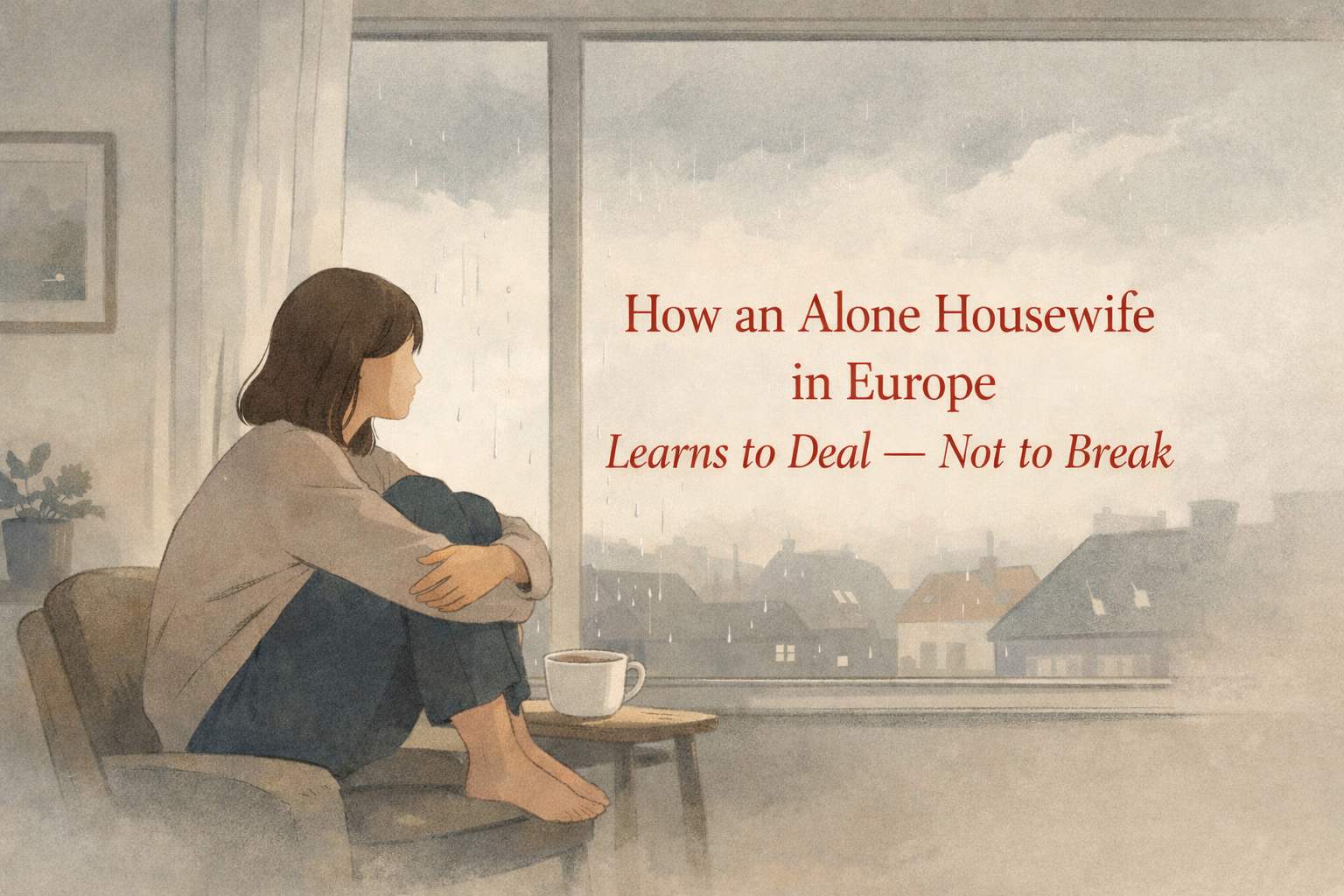
How an Alone Housewife in Europe Learns to Deal — Not to Break
From the outside, life as a housewife in Europe looks calm and well-organised. Everything seems to be in place. But behind closed doors, many women are carrying a quiet weight that no one sees. Anxiety builds slowly, stress becomes constant, energy fades, and relationship tensions feel heavier. What looks like an easy life often hides a silent struggle.
This is not about dramatic breakdowns.
This is about daily emotional pressure — managed alone.
The key is not fixing everything.
The key is learning how to deal without losing mental balance.
Step One: Calm the System Before Handling Anything
When anxiety rises or a difficult interaction happens, the body reacts first. Tight chest, racing thoughts, restlessness — all signs of overload.
Before thinking, explaining, or responding:
- pause
- slow the breath
- change body temperature (cold water, fresh air)
- step away for a few minutes
A calmer body prevents emotional damage later.
No decision made in a rushed emotional state is helpful.
Reduce Mental Overload on Purpose
One major cause of anxiety and low energy is carrying everything in the mind:
appointments, school matters, bills, household planning, worries.
The brain was not designed to store unlimited tasks.
Writing things down daily — even roughly — reduces background stress.
When the mind trusts that nothing will be forgotten, it relaxes.
Less mental clutter = more emotional space.
Low Energy Is Often Emotional, Not Physical
Many women believe constant tiredness means something is wrong with them.
In reality, energy drops when:
- routine repeats without reward
- emotions are suppressed
- identity is limited to responsibilities
- appreciation is missing
Energy improves not by pushing harder, but by restoring meaning.
One small personal activity outside housework — learning, creating, teaching, writing — creates mental fuel. Even 15 minutes daily makes a difference.
When There Are Issues With the Husband: How to Deal, Not Fix
Marriage problems feel heavier in Europe because:
- there is less family mediation
- fewer emotional outlets
- more isolation
Not every issue can be solved immediately.
Some issues repeat. Some belong to personality. Some need time.
Trying to fix everything creates frustration.
Dealing starts with accepting the current phase.
Acceptance does not mean liking the situation.
It means stopping the internal fight.
Separate Behaviour From Self-Worth
A common emotional trap is personalising everything.
Instead of:
“He doesn’t care about me.”
Shift internally to:
“This behaviour hurts, but it does not define my worth.”
This mental separation protects self-respect and reduces emotional intensity.
Respond Slowly, Not React Quickly
Immediate reactions often escalate conflict and create regret.
Pausing before responding:
- protects dignity
- prevents unnecessary arguments
- keeps emotional control intact
Silence for a short time is not weakness.
It is emotional protection.
Lower Expectations Temporarily to Protect Peace
High expectations during difficult phases increase stress.
Lowering expectations for a while:
- reduces disappointment
- stabilises emotions
- restores inner balance
This is not giving up.
This is emotional self-preservation.
3 best and practical Tips to follow
1. Accept the current emotional limit
Stop expecting emotional understanding that has not been shown consistently. Take behaviour as information, not as something to fix right now. This alone reduces disappointment.
2. Say it once, then step back
Express a need clearly one time. If the response doesn’t change, stop repeating it. Repetition increases stress, not connection. Stepping back protects inner calm.
3. Extend the timeline, not the pain
Instead of expecting improvement immediately, allow time. This doesn’t mean accepting the situation forever — it means pausing emotional pressure until stability returns.
Create Emotional Distance Without Becoming Cold
Dealing does not mean fighting or shutting down completely.
It means:
- not chasing emotional validation
- not repeating the same discussions
- not over-explaining feelings
Healthy emotional distance acts like a buffer, allowing calm to return.
Let the Body Release What Words Cannot
Some stress cannot be talked away.
Simple physical regulation helps:
- warm showers
- slow walks
- stretching
- sunlight
- quiet sitting
The body releases stress faster than the mind explains it.
Allow Mixed Emotions Without Guilt
Love and disappointment can exist together.
Commitment and exhaustion can coexist.
Allowing emotions to exist — without judging them — prevents burnout.
Trying to feel only “positive” increases pressure.
Honest acceptance creates stability.
Focus on Stability First, Not Happiness
During emotionally heavy phases, aiming for happiness adds pressure.
The priority should be:
- emotional safety
- mental steadiness
- daily functioning
Stability builds the foundation for future clarity.
Final Thought
Anxiety, stress, low energy, and relationship tensions do not mean failure.
They mean a system carrying too much, for too long, alone.
Dealing is not about changing others.
It is about regulating the self, protecting inner space, and choosing calm over constant struggle.
Quiet strength, realistic expectations, and emotional regulation do not weaken a woman —
they keep her intact.
And sometimes, staying intact is the most powerful step forward.
