
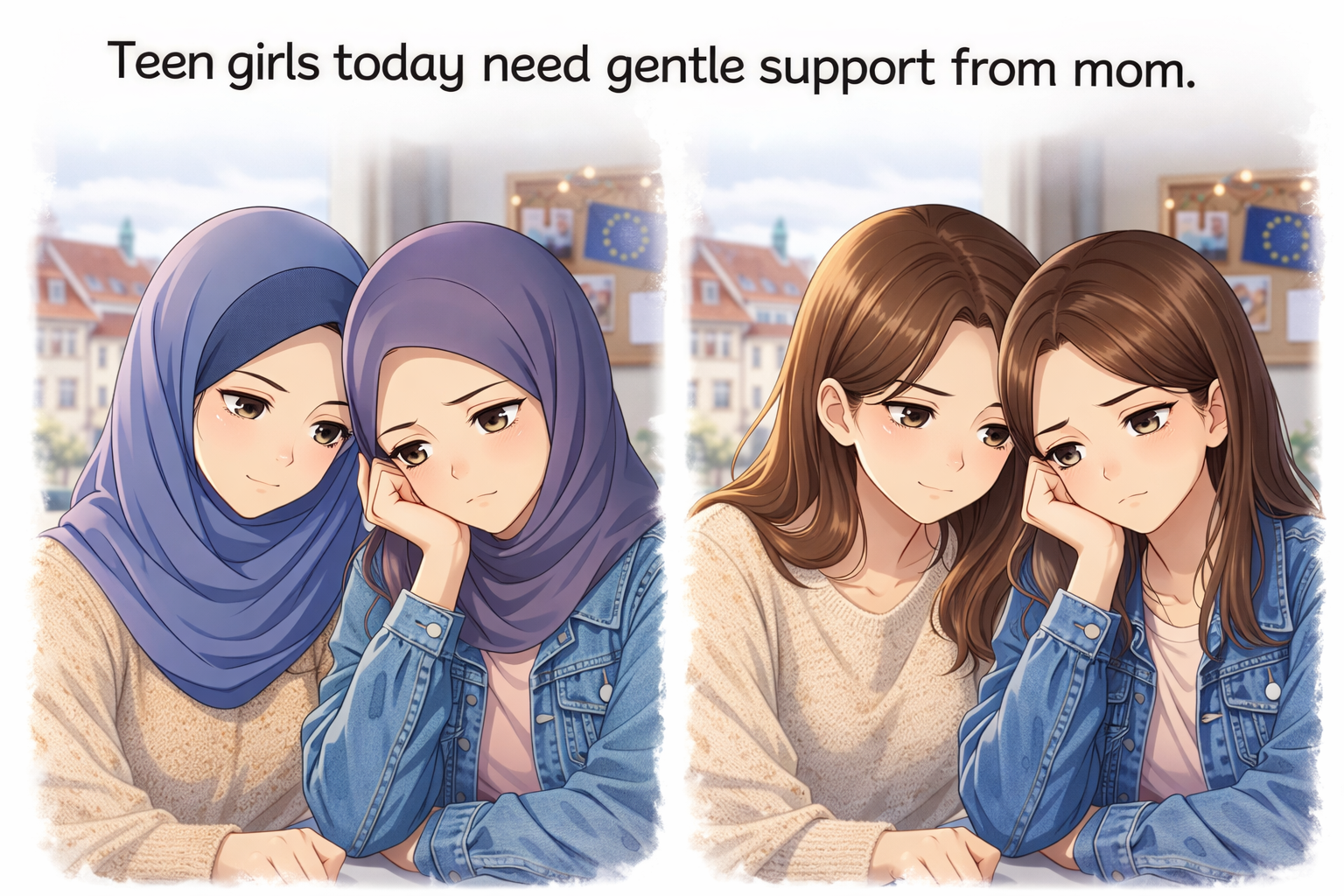
Raising teenage girls in Europe can feel confusing and emotional — not only for the girls, but also for mothers. Teen girls today live between cultures, expectations, school stress, social media pressure, and identity confusion. From the outside, they may look okay — but inside, they may struggle silently.
Some girls are very sensitive, kind-hearted, soft-spoken, and people pleasers. They avoid arguments. They don’t want to disappoint anyone. When life becomes stressful, they don’t react — they freeze. They smile — but that smile feels tired.
This blog explains:
✔ three major problems teen girls face in Europe
✔ clear symptoms to recognise emotional struggle
✔ gentle ways mothers can support them
Emotional Overload & Overthinking
Many teen girls constantly worry about small things:
“What do people think about me?”
“Am I good enough?”
“What if I fail?”
Social media increases comparison. Girls start believing others are:
prettier
happier
more successful
Inside, this creates:
anxiety
self-doubt
perfectionism
emotional burnout
difficulty sleeping
They don’t always cry or complain.
They simply become quiet.
Emotional Symptoms Mothers May Notice
- overthinking every situation
- apologising too much
- guilt for small things
- fear of being judged
- freeze response during stress
- tired or sad smile
- loss of confidence
Sometimes physical signs also appear:
- chest tightness
- stomach pain
- panic
- fast heartbeat
Doctors often call it stress-related, and they are right.
What Happens When Mothers Don’t Notice Their Daughters’ Struggle?
Many teen girls don’t ask for help directly. When their feelings are ignored or misunderstood, they quietly change from the inside. If emotional pain continues for a long time, it can affect their self-worth, confidence, and mental health.
Here are common reactions teenage girls develop when they feel unseen or unsupported:
🔹 1. They Start Hiding Everything
When girls feel like “Mom won’t understand,” they stop sharing.
They may:
hide emotions
keep problems secret
Stop talking openly
pretend everything is fine
Inside, they think:
👉 “My feelings don’t matter.”
👉 “Better to stay quiet.”
This slowly breaks emotional trust between mother and daughter.
2. They Become People-Pleasers
Girls begin to believe love = obedience.
So they:
Say yes even when uncomfortable
avoid saying no
tolerate disrespect
crave approval
Short-term it looks peaceful.
But long-term, it damages self-respect.
3. They Freeze or Shut Down Emotionally
Instead of crying or arguing, some girls go numb.
You may see:
blank face
silent reactions
emotional disconnection
difficulty expressing feelings
This is not an attitude.
It is emotional overload.
🔹 4. They Look for Safety Somewhere Else
If home doesn’t feel emotionally safe, girls look for belonging outside.
Sometimes they:
- attach too strongly to friends
- stay in toxic relationships
- over-share online
- seek validation from strangers
Because everyone needs emotional security — if not at home, then elsewhere.
5. They Develop Negative Self-Talk
They silently start believing:
❌ “I am the problem.”
❌ “I am not good enough.”
❌ “No one really understands me.”
This can lead to:
- anxiety
- low self-worth
- shame
- constant guilt
And these thoughts follow them into adulthood.
Long-Term Damage If Emotional Struggle Is Ignored
When a teen girl’s inner world stays unseen for too long, it can create deep emotional scars.
⚠ Possible long-term effects:
- chronic stress
- anxiety disorders
- depression risk
- fear of relationships
- weak boundaries
- Difficulty trusting others and burnout
hiding true personality
This is why a mother’s emotional presence matters more than rules, education, or discipline.
Why Do Girls Stay Silent?
Because they fear:
judgment
anger
disappointment
emotional rejection
So they choose silence over honesty.
Not because they don’t love their mother —
but because they don’t feel safe enough to open up.
How Mothers Can Help
❤️ allow respectful opinions
❤️ guide instead of controlling
❤️ listen more than lecture
❤️ remind her she belongs in both cultures
When a girl feels understood, she becomes confident.
Friendship & Social Pressure
Belonging means everything at this age.
When friendships become unstable, emotions collapse.
Common struggles:
• gossip
• exclusion
• toxic friends
• online comparison
• peer pressure
Some girls remain silent and blame themselves.
Social Symptoms
- loneliness
- fear of rejection
- changing personality to fit in
- worrying about likes and comments
- staying in unhealthy friendships
How Mothers Can Help
❤️ teach healthy boundaries
“Real friends respect you.”
❤️ encourage real-life activities
sports • art • reading • volunteering
❤️ ask gently
“Which friends make you feel safe?”
❤️ model respect at home
Girls learn self-worth from what they see
How To Recognise If Your Daughter Is Struggling
Look for patterns — not one-day moods.
Emotional & Mental Signs
- low confidence
- constant guilt
- anxiety
- emotional shutdown
- people-pleasing
School-Related Signs
- dropping grades
- panic before exams
- difficulty focusing
- procrastination
Physical Signs
- sleep problems
- tiredness
- appetite change
- low energy
Red Flags
🚨 sudden personality change
🚨 self-hate statements
🚨 frequent crying
🚨 emotional withdrawal
These are not “drama”.
They are pain signals.
A Mother’s Most Powerful Role
Teen girls don’t need perfect mothers.
They need emotionally safe mothers.
That means:
✔ listening without judging
✔ soft language
✔ patience
✔ protection without control
Avoid:
✘ shouting
✘ humiliation
✘ comparison
✘ emotional blackmail
These break trust.
A Helpful Support Script
You can say:
“I’ve noticed you seem tired lately.
I’m not upset. I just care.
If anything is worrying you, I’m here for you.”
This opens the heart — safely.
Final Message
Teenage girls in Europe face emotional overload, identity confusion, social pressure, and silent anxiety — especially sensitive, kind-hearted girls. When mothers create a calm, trusting, loving environment, daughters grow stronger inside.
A girl who feels safe at home
becomes confident in the world.
And that is real empowerment.
